Introduction
White tile is unforgiving. It's bright, reflective, and it amplifies everything placed on top of it, including a rug that doesn't quite fit the room.
Many homeowners struggle with the same problem: a sun-drenched kitchen or great room with glossy porcelain tile that somehow feels cold, flat, or unfinished. The right rug changes that instantly.
Rug choice affects perceived warmth and overall polish, especially in open-concept layouts flooded with natural light. This guide walks through color, texture, pattern, and placement so your next rug feels intentional, not accidental.
Key Takeaways
- White tile's high reflectivity makes rug color and texture choices more visually impactful than on wood or patterned floors
- Bold contrast and tonal harmony are both valid strategies, depending on your desired mood
- Pile height and material affect comfort, durability, and slip safety as much as color
- Room function and long-term material cohesion should drive your decision, not passing trends
What Makes the Perfect Rug for White Tile Floors?
Bright, glossy tile doesn't hide flaws; it highlights them. A muddy color, a wrong-scale pattern, or a rug that's too thin all read more obviously against white tile than against darker or textured flooring. That's why the fundamentals below matter more here than almost anywhere else in the home.
Color & Contrast Fundamentals
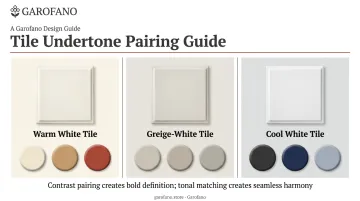
White tile isn't neutral in the way people assume. It carries an undertone, warm, cool, or grayish, that determines which rug hues feel harmonious versus jarring.
- Warm white tile pairs naturally with cream, camel, and terracotta
- Cool white tile leans toward charcoal, navy, and soft gray-blue
- Greige-white tile is the most flexible, working with both warm and cool rug tones
Contrast anchors a space and creates a focal point. Tonal matching, on the other hand, creates airy continuity. Neither is "correct"; it depends on the mood you're building.
Texture and Pile Height
Tile is cold underfoot, literally and visually. Texture is how a rug compensates.
- High-pile wool or shag rugs add warmth and softness, ideal for living rooms and bedrooms
- Flatweave or low-pile rugs suit sleek, contemporary interiors and hold up better in high-traffic zones
Jaipur Living notes that low-pile rugs are easier to vacuum and more resistant to wear in busy hallways and dining rooms, while high-pile construction suits quieter spaces like reading nooks. Debris and dirt also collect less in low-pile fibers, which is a real consideration on tile floors near entries or kitchens.
Garofano's wool-cotton-silk blend rugs are built with this balance in mind, offering plush texture that still holds up to daily foot traffic.
Pattern and Scale
Geometric patterns tend to complement large-format or grid-laid tile since they echo the tile's own linear rhythm. Organic or floral patterns do the opposite job: they soften hard edges and add movement to an otherwise rigid surface.
The scale matters as much as the motif. A pattern that's too small can look busy against expansive tile; one that's too large can overwhelm a modest-sized room. Proportion, not just color, is often what separates a rug that reads as premium from one that reads as generic.
Best Rug Colors for White Tile Floors
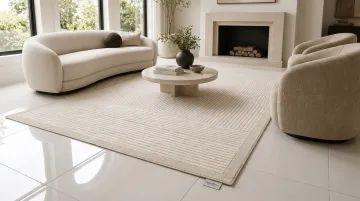
There's no single "best" color here. Darker, contrast tones like charcoal and espresso, or deep navy, anchor a room and create drama. Tonal neutrals like cream, taupe, and greige create a serene, continuous feel. The right pick depends on the mood and size of the room you're working with.
Should a Rug Be Lighter or Darker Than the Floor?
Opinions vary on this too. Designers interviewed by Homes & Gardens explain that a darker rug adds depth and grounds furniture on light floors, while a lighter, lower-contrast rug can make a room feel more open.
A general pattern to work from:
- Large or open-concept rooms often benefit from a darker rug that visually grounds seating or dining areas
- Smaller rooms tend to feel more expansive with a lighter, tonal rug that blends into the floor rather than dividing it
Bold & Saturated Palettes
Jewel tones like emerald and sapphire, plus deep blue and terracotta, make a statement on white tile. These hues pull the eye and pair especially well with warm wood furniture or brass and bronze accents, both common in Italian-inspired interiors. Choose this palette when the rug should be the room's centerpiece rather than a supporting player.
Neutral & Tonal Palettes
Prefer something quieter? Ivory and warm taupe create an understated, minimalist effect that lets architecture and furniture take center stage. Soft greige works as a bridge tone if you want a touch more warmth. This palette suits rooms where the walls, cabinetry, or art already carry visual interest, letting the rug support rather than compete.
Undertone Matching
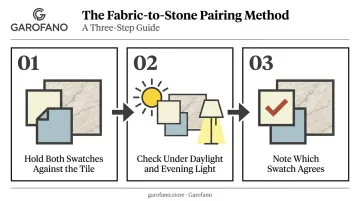
Identifying your tile's undertone takes about five minutes and a couple of fabric swatches.
- Hold a warm cream sample and a cool blue-gray sample against the tile
- Check both under daylight and your room's evening lighting
- Note which sample the tile seems to "agree" with
Marazzi's tile guidance recommends comparing material samples under the room's actual light rather than relying on a product name, since perceived undertone shifts with lighting. Once you know the tile's undertone, choose a rug within that same family for a cohesive look, or intentionally cross it for contrast. Garofano's wool-cotton-silk blend rugs come in both warm and cool colorways, making it simple to match or intentionally contrast your tile's undertone.
What to Consider When Choosing an Area Rug for White Tile Floors
Color gets most of the attention, but function and durability determine whether you're happy with the rug a year from now.
Room Function & Traffic
Where a rug lives dictates what it needs to survive. Traffic levels and moisture exposure should drive pile height and material choice as much as color does.
- Living and dining rooms can support plush, higher-pile rugs where comfort matters more than moisture resistance
- Entryways, kitchens, and bathrooms need low-pile, stain-resistant, easy-clean materials
- Moisture-prone areas call for synthetic fibers or treated natural fibers to avoid mildew or staining over time
Size & Placement
Undersized rugs are the most common styling mistake on tile floors. According to Architectural Digest's rug sizing guide, a dining rug should extend well beyond the table edge so chairs remain supported even when pulled out. The same logic applies in bedrooms, where the rug should reach past the foot of the bed.
Quick sizing rules:
- Living room: rug should extend under the front legs of major seating pieces
- Dining room: rug should extend at least 24 inches beyond the table on all sides
- Bedroom: rug should extend past the foot of the bed and reach the outer edge of nightstands
Material & Durability
| Fiber | Best for | Watch out for |
|---|---|---|
| Wool | Living rooms, bedrooms, balanced traffic | Higher cost |
| Jute | Dry, low-to-moderate traffic areas | Moisture damage, mildew |
| Sisal | Dry, heavier traffic areas | Can stain or warp when wet |
| Performance synthetics | Kitchens, entries, pet-friendly homes | Feel less plush than natural fiber |
A quality rug pad is non-negotiable on tile. It prevents slipping, protects the tile finish from grit trapped under the rug, and extends the rug's own lifespan. Look for rubber or felt-rubber combinations specifically rated for hard flooring, not felt alone, which cushions but doesn't grip.
Design Cohesion & Long-Term Value
In a considered interior, a rug functions as part of the material story, chosen as deliberately as the furniture around it. That means matching its proportions to the room and its finish to everything around it.
Standard, mass-market rug sizing rarely fits custom furniture layouts perfectly. Made-to-order or curated options allow more precise proportion-matching to a specific room's footprint.
How Garofano Can Help
Garofano's Italian-inspired approach doesn't stop at sofas and marble tables. It extends to how rugs are curated alongside furniture, so a room with white tile flooring reads as one cohesive idea rather than a collection of separate purchases.
That same intentionality carries into the materials. Rugs like Calma, Modena, and Siena are built from a wool-forward blend, typically 75% wool, 20% cotton, and 5% silk. A high-low weave adds textural depth to the geometric and abstract patterns, giving each rug enough presence to hold its own against reflective tile without feeling flat or purely decorative.
What sets the buying experience apart:
- Made-to-order pieces with customization options that fit a specific room's proportions, not just standard dimensions
- White-glove delivery with in-home placement, so the rug arrives ready to live in the space
- A curated collection, rather than an overwhelming catalog, designed for a consistent, high-end look across pieces
- Direct communication with the team for a more personal buying experience
Garofano works with private residential clients as well as interior designers, architects, and stagers, maintaining the same build quality and finish across every order. A rug like Calma, for example, ranges from $1,750 to $5,500 depending on sizing, reflecting the kind of proportion-specific customization that off-the-shelf rugs rarely offer.
Conclusion
The best rug for a white tile floor comes down to balance: contrast, texture, and proportion, weighed against your room's specific undertone and how the space actually gets used.
Treat the rug as part of a larger material story that includes your furniture and lighting. As those elements evolve, revisit the rug decision too.
What worked in a rental apartment may not work in a home built around Italian marble and warm wood tones, and that's fine. Good design adapts.
For stone or wood-toned interiors, Garofano's rug collection offers custom sizing and wool-cotton-silk blends to match.
Frequently Asked Questions
What kind of rug is best for tile floors?
Low-pile or flatwoven wool and synthetic blends work best for durability and easy cleaning on tile. Pair any rug with a quality non-slip pad to prevent movement on the smooth surface.
What color rug goes with a white tile floor?
Both contrast colors (charcoal, navy, terracotta) and tonal neutrals (cream, taupe) work well. The right choice depends on your desired mood and the size of the room.
Should an area rug be lighter or darker than the floor?
Darker rugs ground larger or open-concept rooms by adding visual weight. Lighter, tonal rugs preserve a sense of openness and work especially well in smaller spaces.
What size rug works best in a room with white tile flooring?
Size to your furniture, not the room label. That means reaching the front legs of a sofa, extending past the foot of a bed, or covering the area under a dining table and chairs even when pulled out.
Do rugs protect or damage tile floors?
Rugs protect tile from scuffs and scratches in high-traffic areas. Damage typically comes from movement, so a non-slip pad is essential to prevent rubbing or shifting over time.
How do I keep a rug from sliding on tile floors?
Use a rubber or felt-rubber rug pad specifically designed for hard flooring. Check periodically that it still grips well, since pads can lose effectiveness with heavy use.