Many homeowners default to pushing the bed against a single flat wall, only to find it looks cramped or oddly off-center. Others struggle to make a bay window, chimney breast, or dormer ceiling work with a standard layout.
This guide covers why a corner bed placement solves these problems, the design principles that make it work, style ideas for every taste, and the trade-offs worth considering before you commit.
Key Takeaways
- Corner placement frees up central floor space for a desk, bench, or reading chair.
- Plan for at least 24 inches of clearance per side to keep the layout functional.
- Wraparound or upholstered headboards make the corner placement feel intentional, not accidental.
- This layout works well in small apartments and hospitality suites with irregular footprints.
Why a Corner Bed Layout Works
Anchoring a bed diagonally, or against two walls, changes how the entire room functions. Instead of the bed dominating the center, it shifts to the perimeter, opening up floor space for a reading chair, a small desk, or a bench at the foot of an adjacent wall.
That freed-up space matters more than ever. Average new-home size in the US dropped from 2,479 square feet in 2022 to 2,411 square feet in 2023, the smallest figure in 13 years. 38% of builders reported building smaller homes in 2023, with 26% planning to go smaller still in 2024. Every square foot has to work harder.
Beyond square footage, a corner placement changes the feel of the room:
- Cocoon-like intimacy – two sides of the bed already meet walls, creating an enclosed, nook-like sleeping area
- Architectural problem-solving – corner beds work with bay windows, chimney breasts, and sloped dormer ceilings instead of fighting them
- Design consistency at scale – hospitality and multi-unit projects use corner layouts to standardize furniture placement across irregular room shapes while keeping a premium, considered look
For primary suites carrying the extra weight of a seating area or home office corner, this layout isn't a compromise. It's often the smarter plan.
Key Design Principles for Placing a Bed in the Corner
A corner bed only works if the clearances are right. Get them wrong, and daily life around the bed becomes a hassle.
Clearance and Access
Professional guidance varies by mattress size, not a flat rule. According to a bedroom clearance guide from Homes & Gardens, recommended open-side clearance runs:
| Bed Size | Open Side Clearance | Foot-of-Bed Clearance |
|---|---|---|
| Twin/Full | 18-24 in | 24-30 in |
| Queen | 24-30 in | 30-36 in |
| King/Cal King | 30-36 in | 36-42 in |
For any adjacent dresser or wardrobe, leave 36 to 40 inches so drawers and doors open without obstruction. Hinged closet doors need roughly 36 inches; sliding doors can work with 24 to 30.
Grounding the Bed Visually
A bed pushed into a corner without a strong headboard can look like an afterthought. An upholstered or wraparound headboard solves this instantly, giving the corner a built-in look rather than a space-saving shortcut. Garofano's upholstered headboard beds, for example, use substantial profiles built to anchor a corner rather than disappear into it.
Proportion matters too: a small headboard in a large bedroom gets lost, while bigger rooms call for bolder treatments, a higher headboard, a canopy frame, or a wraparound design that fills the visual space with intention.
Finally, think about orientation. Position the bed to catch morning light from a nearby window, or angle it so you wake up facing a fireplace or piece of art rather than a blank wall.
Corner Bed Design Ideas for Every Bedroom Style
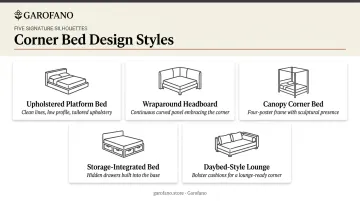
Once the clearances and proportions are settled, the style options open up considerably. Here's a shortlist that moves from understated to statement-making.
Upholstered Platform Corner Bed
A low-profile platform bed with clean lines suits contemporary primary suites especially well in a corner. The reduced height keeps sightlines open across the room, which matters when the bed is already claiming two walls.
Garofano's Italian-inspired upholstered pieces, including the Letto Bellagio, are built with the kind of refined proportions and suite-like presence that suit a considered, high-end corner layout rather than a generic dorm-style tuck.
Wraparound or Two-Sided Headboard Bed
Extending the headboard along both walls of the corner creates a built-in, lounge-like effect. It also doubles as a backrest for reading, working on a laptop, or sitting up with morning coffee.
This treatment works best when the fabric or upholstery continues seamlessly around the corner angle. The two panels then read as one cohesive piece, rather than two separate headboards bumping into each other.
Canopy Corner Bed
A canopy frame adds height and visual drama, which makes it a strong fit for larger bedrooms that can absorb a bolder architectural statement. In a corner, the canopy also helps define the sleeping zone within an open floor plan. A four-poster or ceiling-mounted frame both work, provided the room has enough height to carry the added visual weight.
Storage-Integrated Corner Bed
Drawer or hydraulic storage beneath the mattress maximizes utility in space-constrained rooms. This approach shines in corner layouts, where the bed frame is already doing double duty as a room divider of sorts. Choose drawers on the two exposed sides of the frame, since the walled sides won't allow access.
Daybed-Style Corner Lounge
A bolster-backed daybed tucked into a corner functions as both a sleeping surface and a daytime lounge. It's a natural fit for guest suites or multi-purpose rooms that need to flex between functions throughout the week. A few accent pillows and a folded throw make the switch between day and night use feel intentional rather than improvised.
Styling Your Corner Bed: Finishing Touches That Matter
Corner placement limits available surface space, so the usual bedside table setup often needs rethinking.
Swap bulky nightstands for:
- Low-profile side tables, sized to fit tighter corner clearances
- Slim wall-mounted sconces instead of table lamps
- Floating shelves that hold a lamp and a book without eating floor space
A piece like Garofano's Comodino Varese nightstand works well here, compact enough for a corner footprint without sacrificing the material quality you'd expect from a larger case piece.
Nightstand size isn't the only challenge corner placement creates. Angled corner beds often leave a triangular patch of "dead space" behind the headboard, and left empty, it can feel like an oversight. Fill it with:
- Floor lamp for ambient light
- Oversized plant for texture and height
- Gallery wall or single large art piece
Finally, layered textiles do more visual work than most people expect. A tailored bedspread with matching bolster cushions helps the bed read as a deliberate design choice, not a space-saving compromise.
Pros and Cons of a Corner Bed Placement
Every layout decision involves trade-offs. Here's the honest breakdown.
| Advantages | Trade-offs |
|---|---|
| Frees up central floor space | Custom or upholstered corner frames cost more |
| Creates a cozier, enclosed feel | Bed-making takes more effort with two sides blocked |
| Works with irregular room shapes | Not easily reversed to a centered layout |
| Solves awkward architectural features | May weaken the bed as a room's focal point |
That last point is worth sitting with. Design experts at Better Homes & Gardens advise against a bed touching two walls. This placement can minimize access and reduce symmetry, though small rooms and intentional built-ins remain the exceptions rather than the rule.
Before finalizing a corner layout, weigh:
- Room size – smaller rooms benefit most from the floor-space savings
- Personal routine – two sleepers need to consider access on both sides
- Long-term flexibility – a built-in-style corner bed isn't quick to undo
Garofano's made-to-order approach lets you tailor the bed's dimensions, headboard height, and finish to a specific corner's constraints, rather than forcing a standard frame into a non-standard space.
Frequently Asked Questions
Are beds in a corner a good idea?
Corner placement works well for rooms needing more open floor space or a cozier feel. It's most successful when paired with a properly proportioned headboard and enough clearance for daily use.
What do you put behind a corner bed?
Mirrors, art, tapestries, or a tall floor plant work well to fill the "dead space" behind an angled bed. These keep the corner visually grounded instead of feeling empty.
How much clearance space should you leave around a corner bed?
Plan for roughly 18 to 36 inches per open side, depending on mattress size, plus 36 to 40 inches near any dresser or wardrobe. Larger beds need more room on each side.
Can a corner bed layout work in a spacious master bedroom, not just small rooms?
Yes. Larger rooms can use bolder corner treatments like canopies or wraparound headboards, turning the placement into a deliberate design statement rather than a space-saving fix.
How do you style a corner bed headboard for a polished look?
Upholstered, wraparound, or tufted headboards in a tailored fabric help the bed feel built-in and cohesive. Garofano's made-to-order headboards let you continue that fabric around the corner angle, avoiding a disjointed, two-piece look.
Are corner bed layouts suitable for hospitality or guest suites?
Yes. Corner beds standardize well across irregular guestroom shapes in hospitality and multi-unit settings, while still maintaining a consistent, premium look across units.