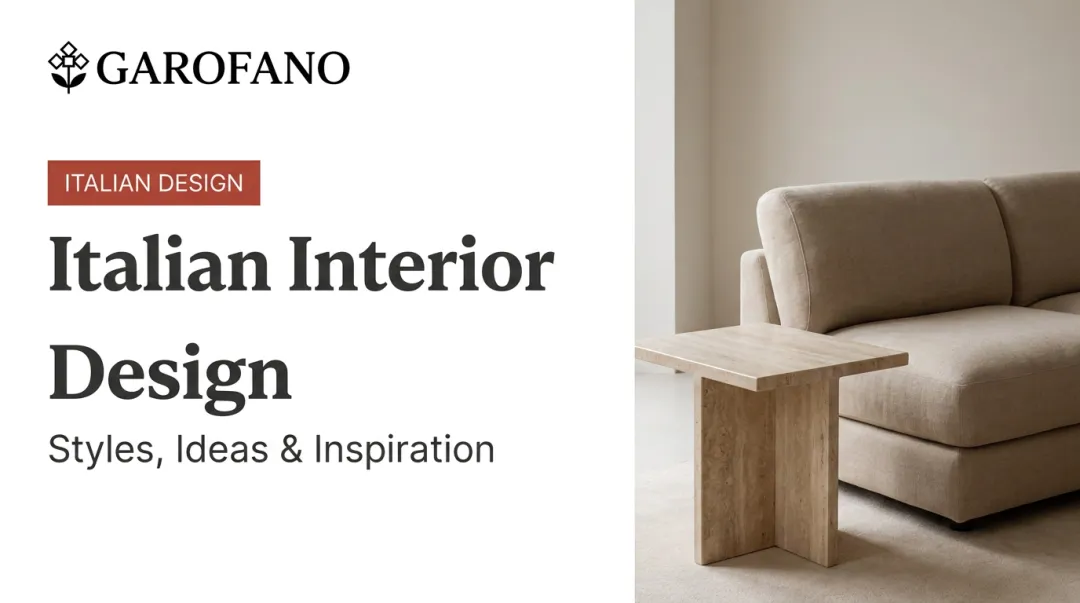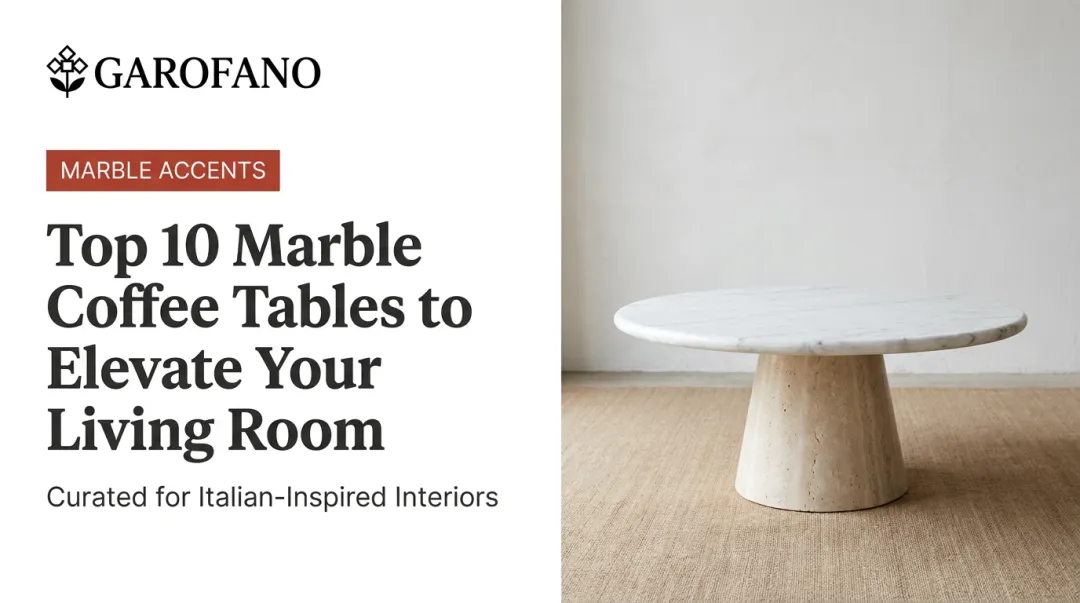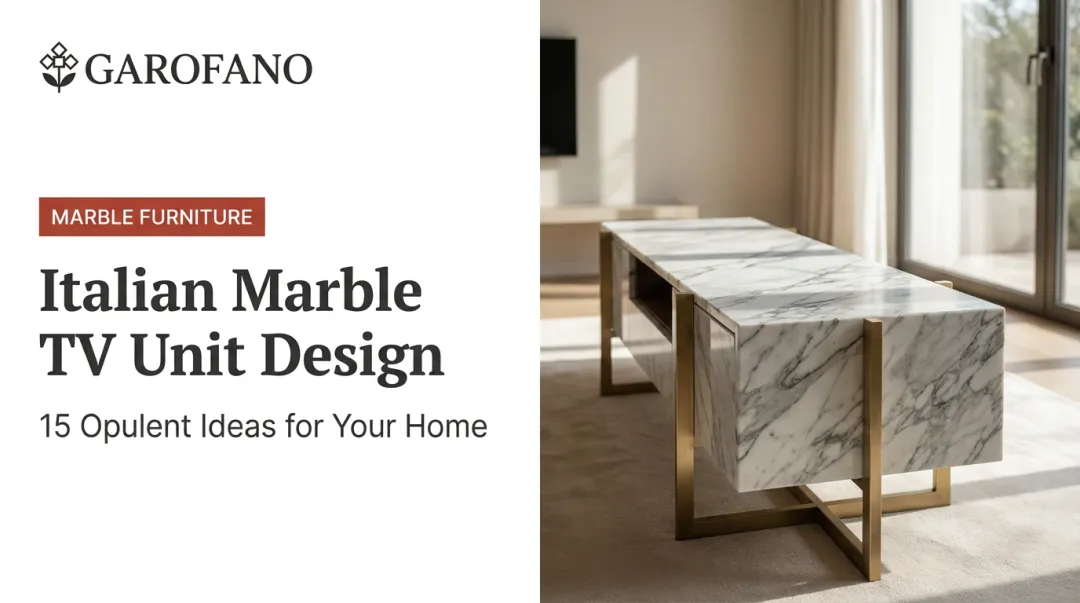
Minimalist interior design is built on restraint. Clean lines, uncluttered surfaces, a focused palette, and purposeful use of form, light, and material do the visual work that decoration handles in other styles. The discipline isn't about owning less — it's about designing with more thought.
This guide covers everything you need to apply the style well: its definition and origins, core design elements, the shift toward warm minimalism, room-by-room application, practical styling tips, and how minimalism compares to Japandi.
Key Takeaways
- Minimalist design is built on function, clean silhouettes, and a restrained palette — done right, it feels calm and considered, not cold
- Warm minimalism now defines the contemporary approach: natural textures, earthy tones, and quality materials over stark white rooms
- Every piece in a minimalist space should earn its place — if it doesn't serve the room, it doesn't belong
- Negative space is an active design tool, not an absence of budget or ideas
- Minimalism and Japandi share values but differ in cultural origin, material expression, and tolerance for imperfection
What Is Minimalist Interior Design?
Architectural Digest defines minimalist interiors through clean lines, limited ornament, neutral or monochromatic palettes, open layouts, and natural light — framing it as a residential philosophy as much as an aesthetic. Designer Anishka Clarke puts it plainly: minimalism is about identifying what is needed and avoiding excess consumption, not owning the fewest possible objects. That distinction matters. Restraint and deprivation are not the same thing.
Origins: Two Parallel Lineages
Minimalism draws from two distinct design traditions:
- The Bauhaus movement — founded by Walter Gropius in Weimar in 1919, the Bauhaus advanced the principle that form should follow function. Its program favored simplified forms, new materials, and designs responsive to purpose rather than decoration
- Japanese design philosophy — particularly ma (the intentional interval or space between entities) and wabi-sabi (an appreciation of impermanence and imperfection). These concepts inform how negative space and material authenticity function in minimalist interiors
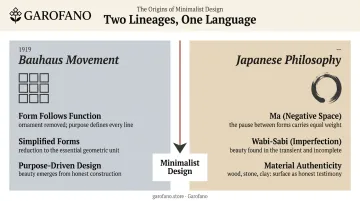
AD dates minimalism as a distinct style to the 1960s and 1970s, with broader residential adoption through the 1980s. Where modernism loosened the rules of ornamentation, minimalism eliminated them: fewer pieces, greater negative space, a more disciplined palette.
What Minimalism Is Not
Minimalist spaces are not cold, uncomfortable, or impersonal — that's the most common misreading of the style. The goal is calm, not austerity. Warmth comes from material quality and proportion, not from accumulation.
Core Elements of Minimalist Interior Design
Clean Lines and Simple Forms
Minimalist furniture favors flat surfaces, geometric shapes, and the absence of ornate detailing. Each piece should stand on its silhouette alone, which makes proportion critical. A sofa with an awkward scale or a table with fussy legs will read as clutter even in an otherwise spare room.
Restrained Color Palette
The typical minimalist palette runs through whites, soft grays, warm beiges, and muted earth tones. What gives these spaces depth isn't contrast between colors — it's tone-on-tone layering within a neutral field. An ivory wall against an oatmeal sofa against a warm stone floor creates richness without visual noise. Black works as a graphic accent in small doses: a dark metal base, a lamp, a single framed artwork.
Negative Space as a Design Tool
Breathing room around furniture and on walls is an active, deliberate choice in minimalist design. When a sofa sits in a generous volume of space rather than pressed against every wall, the piece becomes more impactful, not less. This is the concept of ma in practice.
Quality Materials Over Quantity
When there are fewer elements in a room, each one carries more visual weight. Natural stone, solid wood, linen, and leather aren't decorative gestures in a minimalist interior — they are the design. Their inherent texture, grain, and aging characteristics replace patterned wallpaper, decorative molding, and layered accessories.
This is where investment in well-crafted furniture pays dividends. A piece like Garofano's Eurotas sofa earns its place in a minimalist room because the silhouette and material do all the work — its low horizontal profile and channel-stitched upholstery carry architectural weight without relying on ornamentation.
Light as a Structural Element
Natural light is treated as an essential component, not a backdrop. Maximizing window exposure, choosing sheer or minimal window treatments, and using mirrors or reflective surfaces to distribute daylight all extend how a space feels without adding a single object.
The Modern Evolution: Warm Minimalism
The stark, clinical white interiors of 20th-century minimalism have largely given way to something more livable. AD's 2025 interior design forecast identified "calming minimalism" as a defining direction — expressed through chalky clay, Venetian plaster, and warm tactility rather than bleached surfaces and hard edges.
The shift looks like this:
| Classic Minimalism | Warm Minimalism |
|---|---|
| Pure white walls | Ivory, cream, clay, raw plaster |
| Smooth, precise surfaces | Textured plaster, honed stone, raw wood grain |
| Visual austerity | Calm with tactile richness |
| Clinical restraint | Livable restraint |
What Warm Minimalism Actually Adds
The philosophy stays intact — fewer pieces, deliberate negative space, quality over quantity. What changes is the sensory register. Warm minimalism introduces:
- Plaster walls with a hand-applied finish instead of painted drywall
- Natural wood grain — unpolished, warm-toned, visible
- Linen and wool textiles for bedding, cushions, and curtains
- Honed stone surfaces in travertine, limestone, or pale marble with soft, matte finishes
- Organic forms — gently curved furniture that softens geometric precision
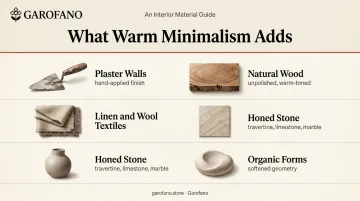
The result is a space that reads as calm without reading as cold. House & Garden makes this point directly: minimalism need not feel cold, and warm lighting, wood grain, marble, and linen are the tools that prevent it.
Travertine is a fitting illustration of this principle in practice. Garofano's Consolle Lucca Travertino and Vassoio Travertino Onda tray carry exactly those qualities — pale beige tones, visible porous texture, and the kind of organic warmth that doesn't require ornamentation to register as refined.
Room-by-Room Minimalist Design Guide
Minimalism applies differently depending on the room's function. The discipline is consistent — only what is essential — but what counts as essential changes.
Minimalist Living Room
The living room anchors around one or two hero furniture pieces. Everything else supports them or stays out.
- Choose a sofa with a low-profile, horizontally expansive silhouette and neutral upholstery — the Eurotas's fully upholstered integrated base keeps the visual line unbroken
- Keep coffee table surfaces to one considered vignette, not competing objects across every surface
- Leave floor space open — resist the urge to fill corners
- Hang a single artwork as the focal point; one well-chosen piece carries more weight than a gallery wall
Minimalist Bedroom
A minimalist bedroom is defined by its calm, not by what's missing.
- Anchor the room with a bed frame with a strong, simple silhouette — the headboard becomes the room's architectural statement
- Use a restrained palette for bedding: linen, cotton, or wool-blend in ivory, stone, or warm gray
- Keep bedside surfaces to a lamp and one book — nothing more
- Layer lighting rather than relying on overhead alone — a bedside lamp adds warmth that ceiling-only light can't
Minimalist Kitchen and Dining Space
In the kitchen, the minimalist principle is concealment: integrated storage hides appliances and kitchenware so countertops stay uncluttered. A tonal cabinetry palette — soft sage, warm white, matte charcoal — keeps the room cohesive.
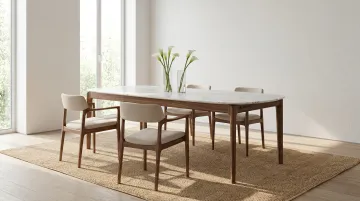
For the dining space, Elle Decor identifies the dining table and chairs as the room's focal point in a minimalist room — the material quality of those two elements should be enough to carry the space. The Tavolo Varenna's slim pale marble top on a warm wooden frame pairs naturally with the Valentina chair's open walnut silhouette and linen upholstery. Together, they deliver exactly that effect.
Practical Tips to Apply Minimalist Interior Design
Start With Subtraction, Not Addition
Before buying anything, edit what already exists. Of each piece in the room, ask: does this serve a function, add genuine beauty, or both? If neither, remove it. This exercise clarifies what an anchor piece actually needs to do before any purchasing decision is made.
Use the 3-5-7 Rule for Styling
The 3-5-7 rule — a styling convention documented by professional designers in Homes & Gardens — recommends grouping objects in odd numbers (3, 5, or 7) and varying height, texture, and visual weight within each grouping. Applied to a minimalist coffee table or console, it prevents the surface from feeling empty without filling it.
A practical example: a travertine tray, one tall candleholder, and a small stone block — three objects at different heights and in different materials, balanced without relying on symmetry.
Invest in Fewer, Better Pieces
Fewer pieces means each one carries more visual weight — and more responsibility. Mintel's 2026 US Shopping for the Home Consumer Report confirms that buyers want confidence higher prices deliver lasting quality and function, not just aesthetics. In a minimalist room, that test is baked into the style itself. A poorly constructed sofa with a weak silhouette is far more visible when it's one of three pieces in the room than when it's surrounded by ten others.
Use Texture to Prevent Flatness
Because minimalist spaces use fewer colors and objects, texture becomes the primary source of visual interest. Layer different material textures to give depth without adding clutter:
- A linen sofa
- A honed stone coffee table
- A wool or wool-blend rug
- A ceramic or travertine decorative object
Each material reads differently in light, and together they create a room that feels considered rather than sparse.
Minimalist Design vs. Japandi: Key Differences
Japandi — a hybrid of Japanese and Scandinavian design — is frequently confused with minimalism because the visual outcomes often overlap. Both reject excess ornamentation, value negative space, and prioritize quality materials and a sense of calm. The differences are worth knowing, though.
| Minimalism | Japandi | |
|---|---|---|
| Cultural roots | Western (Bauhaus + Japanese influence) | Japanese (wabi-sabi) + Scandinavian (hygge) |
| Treatment of imperfection | Tends toward precision and smooth surfaces | Imperfection and patina are explicit values |
| Material vocabulary | Stone, linen, leather, solid wood | Wood, stone, rattan, paper, cotton, linen |
| Palette | Neutral fields, occasional black accent | Warmer, more organic earthy tones |
| Object reduction | Stricter geometric reduction | Permits more organic layering of natural materials |
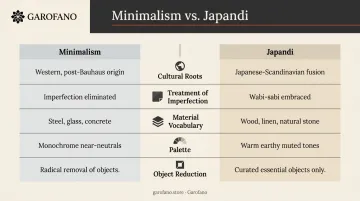
Japandi sits within the broader minimalist family, but with a distinct character: wabi-sabi imperfection and craft are its core, where Western minimalism prioritizes geometric purity and strict reduction. Vogue notes that Japandi interest spiked significantly in 2020 — a signal that the appetite for calm, considered interiors extends well beyond any single aesthetic category.
Frequently Asked Questions
What is minimalist interior design?
Minimalist interior design is a style built on essentials: clean lines, a restrained color palette, and purposeful use of space and material. Every element earns its place, and anything decorative or functional that doesn't contribute to visual calm is removed.
What is the 3-5-7 rule in interior design?
The 3-5-7 rule is a styling guideline that groups objects in odd numbers, with varying heights, textures, and visual weights within each grouping. It creates natural balance and rhythm without looking symmetrical or cluttered.
Is minimalist interior design still popular in 2026?
Minimalism remains highly relevant. Dezeen's 2026 forecast points to "curated calm over clutter" as the dominant direction, while AD profiled leading minimalist residential designers as recently as April 2026. The style has evolved toward warmer, more tactile expressions rather than stark white rooms.
What is the difference between minimalist interior design and Japandi?
Both emphasize restraint, natural materials, and calm aesthetics. Japandi blends Japanese wabi-sabi imperfection with Scandinavian warmth, making craft and organic layering central. Minimalism focuses more on geometric purity, strict reduction, and negative space, with less tolerance for visible patina or irregularity.
What colors work best in minimalist interior design?
Neutral, tonal palettes — whites, warm off-whites, soft grays, beiges, and muted earthy tones — form the foundation. Black or deep charcoal works well as a sparingly used accent to add graphic contrast without disrupting the overall calm.
How do I start decorating a minimalist room?
Begin by editing what already exists: remove anything that serves neither function nor genuine beauty. Then invest in one or two quality anchor pieces and build outward with intentional texture, living with the space before adding anything more.