Introduction
The nightstand is the first surface you see in the morning and the last before you close your eyes. Yet it's consistently one of the most neglected spots in the bedroom — a landing zone for charging cables, empty glasses, and things that belong elsewhere.
That neglect has a cost. A 2025 study in the Journal of Environmental Psychology found that home clutter correlates with lower well-being, with perceived home beauty acting as a partial mediator.
A 2017 sleep research abstract reinforced this, showing that decluttering habits predicted better sleep-quality scores among over 1,000 participants. The research is correlational — but the connection between visual order and rest is consistent enough to take seriously.
What sits on your nightstand shapes how your bedroom feels — and by extension, how well you sleep in it. This guide covers 20 nightstand decor ideas organized by category, plus the styling principles that make them work together.
Key Takeaways
- Keep 3–5 items on the surface; negative space is part of the composition
- Vary height: one tall anchor, one mid-height element, one low accent
- Mix materials — wood, ceramic, glass, linen — for depth without clutter
- Every item should serve a purpose: light, function, nature, ambiance, or personal meaning
- Current trends favor natural materials, sculptural lamps, and analog objects over maximalist displays
The Golden Rules of Nightstand Styling
Before placing a single object, understand the principles that separate a curated vignette from a cluttered surface.
The Restraint Benchmark
House Beautiful designers recommend keeping only 1–3 items visible at once. Designer Kati Curtis frames it more usefully: one practical item, one organic element, one decorative piece. That category-based thinking beats any fixed number — it forces deliberate choices rather than accumulation.
Accessories arranged at a single height create visual flatness. A simple three-level hierarchy fixes that:
- Tall anchor — a lamp or tall vase
- Mid-height element — a plant, candle, or carafe
- Low accent — a tray, book stack, or flat dish
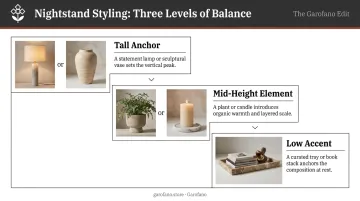
This rhythm creates movement without crowding.
The Material Mixing Principle
Pairing a matte ceramic with a warm wood surface and a glass object creates contrast that reads as curated, not accidental. Italian design has long treated this kind of material layering as foundational — wood grounds, glass opens, stone anchors.
Avoid surfaces where everything shares the same texture or sheen. One matte, one reflective, one natural is a solid starting point.
The Function-First Filter
Every item on the nightstand should pass at least one test:
- Light — does it illuminate?
- Function — does it store, organize, or hold something useful?
- Nature — does it bring organic material or life to the surface?
- Ambiance — does it create mood or scent?
- Personal meaning — does it tell your story?
If an object fails all five, it belongs in a drawer.
The filter also clarifies why the nightstand itself matters. Its height relative to the mattress, its finish, and whether it offers a drawer or open shelf all shape what can reasonably live on top. Garofano's nightstand collection is built around this idea — proportions and storage are considered first, so the surface arrangement has a solid foundation to work from.
20 Beautiful Nightstand Decor Ideas
Lighting Ideas
1. Table lamp with a warm-toned bulb. Choose a lamp tall enough that the bottom of the shade sits roughly at eye level when seated in bed. Fabric shades — linen in particular — diffuse light more softly than opaque ones, creating the kind of warm, indirect glow that supports winding down. Sleep Foundation guidance confirms that warmer, dimmer light before bed is preferable to cooler, brighter exposure.
2. Wall-mounted sconce. When the nightstand footprint is small, a sconce frees the entire surface for other objects while still delivering directional reading light. Architectural Digest explicitly recommends wall-mounted sconces as a surface-preserving solution for small bedrooms.
3. Dimmable sculptural lamp. A lamp with an organic, asymmetric, or ceramic body functions as art when switched off and becomes atmosphere when on. Treating bedside lighting as a sculptural moment — not just a utility — is one of the more considered upgrades a bedroom can make.
4. A single candle. Flameless LED versions deliver the same warm visual effect for safety-conscious spaces. Position it slightly lower than the lamp to reinforce the height hierarchy.
Botanicals and Natural Elements
5. Small potted plant. Snake plants, pothos, and peace lilies are common choices. A 2015 randomized crossover study found that interacting with indoor plants reduced stress markers and blood pressure compared to screen-based tasks. Passive potted plants don't meaningfully purify air in normal rooms — but the visual and psychological calm they provide is real.
6. A single stem or bud vase. Dried stems (eucalyptus, grasses, or cotton) maintain an organic feel without requiring replacement. Fresh flowers work if you enjoy the ritual of changing them.
7. Smooth stones, crystals, or a travertine offcut. A small piece of natural stone introduces quiet weight and grounding texture. Even a single agate slice or marble slab fragment adds materiality that a ceramic alone can't replicate.
8. A woven or linen tray. Used as a base layer, a tray ties natural textures together and contains smaller items without making the surface feel utilitarian.
Functional Accents That Double as Decor
9. A ceramic or marble jewelry dish. A dedicated landing spot for rings and earrings prevents the scattered-accessory chaos that accumulates otherwise. The dish itself , especially in matte ceramic or veined marble, functions as a focal accent.
10. A glass or ceramic water carafe with a small cup. More considered than a plastic bottle, a carafe adds height variation to the arrangement and addresses the practical need for overnight hydration.
11. A lidded box. In lacquered wood, ceramic, or fabric-covered card, a lidded box conceals remotes, lip balm, or chargers while presenting a clean exterior. Garofano's Scatola Grigio Seta is one example of a bedroom-adjacent accessory described as embodying a "quiet luxury aesthetic with timeless design."
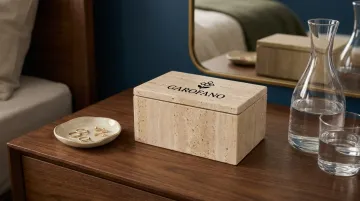
12. A decorative tray used as an organizer. Corralling the candle, carafe, and dish onto a single tray makes the arrangement look intentional and makes cleaning the nightstand considerably easier.
Personal Touches and Printed Matter
13. A curated stack of 2–3 hardcover books. Book spines contribute color to the arrangement's palette. More practically, books signal a screen-free wind-down ritual and offer a meaningful counterpoint to the phone that tends to occupy the same surface.
14. A framed photograph or small piece of art. Even a 4×6 frame with a meaningful image adds warmth and personal narrative to an otherwise design-forward surface. Keep the frame material consistent with the other objects' finishes.
15. A small sculptural object or objet d'art. In Italian-inspired interiors, a single handcrafted piece carries more visual weight than several generic trinkets combined. A miniature vessel or hand-thrown ceramic is enough. One considered object reads as a choice; several small ones read as accumulation.
16. A handwritten note or intention card in a small stand. A low-commitment detail that adds a wellness layer without consuming much surface space.
Scent and Ambiance
17. A scented candle in a quality vessel. Lavender and bergamot have the strongest research support for sleep-adjacent relaxation, though both warrant qualified language: a 2022 systematic review found lavender associated with improved sleep-quality measures in people without insomnia, while a 2023 trial found bergamot reduced psychological stress scores. The vessel matters as much as the scent — ceramic, amber glass, and stone contribute to the decor even when unlit.
18. An essential oil diffuser. Ultrasonic diffusers create a cool mist; reed diffusers function as what Architectural Digest describes as "functional art objects." Both serve the nightstand well , and the choice comes down to whether you prefer active diffusion or passive scent.
19. A small analog clock. A clock with a warm dial reduces the impulse to reach for a phone. A controlled crossover study found that reading from a light-emitting screen for four hours before bed suppressed evening melatonin and delayed circadian timing by over 1.5 hours compared to print. Removing that screen trigger (even partially) is worth the shelf space.
20. A coaster in an interesting material. An agate slice, marble disc, or woven rattan coaster positioned beneath the candle or carafe adds a deliberate layering detail. It also protects the nightstand surface , which matters if you've invested in a piece worth keeping.
How to Style Your Nightstand by Aesthetic
Minimalist
Neutral tones, one lamp, one book, one small plant. The negative space does the work. Pair with a nightstand in light oak or matte white — surfaces where the object and its surroundings are equally considered.
Quiet Luxury / Italian-Inspired
Material quality over quantity defines this look:
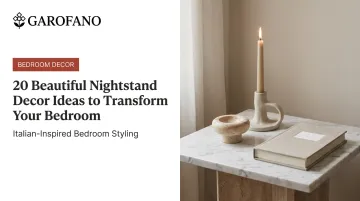
- Travertine or marble tray as the base layer
- Amber glass candle vessel
- Linen or ceramic lamp shade
- A single sculptural object
- A hardcover with a beautiful spine
Proportion and material honesty are the defining principles — not price alone. A well-proportioned base piece shapes everything arranged above it.
Organic / Bohemian
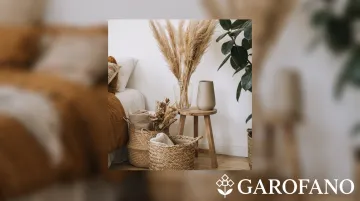
Where the previous aesthetics reward restraint, this one rewards accumulation. Woven textures, dried botanicals, raw ceramic vessels, and layered natural objects create a mood that feels collected rather than arranged. Height variation still applies, but the materials can be rougher and more varied than in a minimalist or quiet luxury setup.
Nightstand Decor for Small Spaces
A smaller nightstand footprint changes the logic of what goes on it. Start by moving lighting off the surface entirely. Wall-mounted sconces preserve the entire top for other objects. Architectural Digest specifically names sconces and floating shelves as wall-mounted solutions for small bedrooms — the vertical plane absorbs what the horizontal one can't.
Choose multi-functional objects:
- A lidded box that stores and decorates simultaneously
- A tray that organizes multiple items into one visual unit
- A carafe for hydration — and a welcome note of height variation
Keep the total to three items: one light source, one personal or natural element, one functional piece. On a small surface, restraint isn't a compromise — it's the design decision that makes everything else land correctly.
Frequently Asked Questions
What is the rule for a nightstand?
Keep items to 3–5, with each serving at least one clear purpose — light, function, nature, ambiance, or personal meaning. Vary heights across the arrangement to create visual rhythm. When in doubt, remove rather than add.
What are the nightstand trends in 2026?
Natural materials (travertine, raw ceramics, rattan), sculptural and artisan-crafted lamps, and analog objects like books and clocks are all editorially supported for 2026. Dezeen describes the direction as "curated calm": deliberate, considered layering that preserves personality rather than stripping the surface bare.
What should I put on my nightstand?
Five items cover the essentials without overcrowding:
- A lamp for task and ambient light
- A plant or natural element
- A scented candle or diffuser
- A functional tray or dish for small essentials
- One personal touch — a book or small framed photo
How many items should be on a nightstand?
Three to five items is the practical target. Fewer items allow each piece to register visually. Overcrowding a small surface creates visual noise that works against the calm a bedroom should offer.
Should both nightstands in a bedroom match?
Matching nightstands create symmetry and a cohesive look in most bedroom styles. Intentionally mismatched pairs can work in eclectic spaces, provided the two pieces share at least one common element — similar height, finish, or material — to hold the composition together.
How do I style a nightstand for a small bedroom?
Use wall-mounted lighting to free up the surface, limit objects to three items, and choose multi-functional pieces. A lidded box or a tray that corrals several small items into one visual unit is more effective than trying to fit individual objects onto a tight surface.