Introduction
Some furniture styles fade with the season. Traditional bedroom furniture doesn't. The warmth of carved walnut, the architectural presence of a four-poster bed, the quiet logic of a symmetrically arranged suite — these are things that don't require a trend cycle to justify their place in a room.
Many people hesitate anyway. They want a bedroom that feels elevated and enduring, but worry that "traditional" means stiff, heavy, or frozen in some Victorian parlor aesthetic. The best traditional bedrooms today are grounded in historical design logic — not bound by it.
This guide covers 10 specific furniture ideas — spanning bed frames, storage pieces, and accent furniture — drawn from European and American traditional design. Each has anchored beautiful rooms across multiple decades and holds up just as well now.
Key Takeaways
- The bed frame sets the tone for everything else — start there before selecting any other piece
- Symmetry is the defining compositional principle of traditional bedroom design
- A cohesive furniture suite reads more elevated than a collection of unrelated pieces
- Quality of construction matters more than surface ornamentation
- Traditional and contemporary can coexist; the two styles share space well when restraint guides the selection
What Is Traditional Bedroom Furniture?
Architectural Digest defines traditional interior design as rooted in 18th- and 19th-century European references, organized around symmetry, order, carved wood, and historical continuity. For bedrooms specifically, that translates to solid wood construction, warm finishes, symmetrical layouts, and furniture with genuine visual weight — pieces that feel permanent rather than provisional.
How It Differs from Other Styles
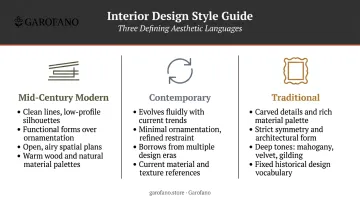
Each major design style has a fixed vocabulary. Traditional sits apart from its neighbors in one key way: it holds its historical references rather than evolving with trends:
- Mid-century modern — clean lines, low-profile silhouettes, functional forms, open plans
- Contemporary — reflects current design trends and evolves over time; minimal ornamentation
- Traditional — fixed historical vocabulary: carved details, rich materials, symmetry, architectural form
The Modern Evolution of Traditional
That fixed vocabulary doesn't mean traditional bedrooms are frozen in time. Designers now apply these historical references selectively, describing the best results as "timeless with personality" — antiques or heritage furniture paired with modern art, bolder color choices, and deliberate simplification.
House Beautiful notes that the matching furnishings and strong symmetry remain constant; what's changed is the willingness to let a few well-chosen pieces carry the room rather than filling every surface.
10 Traditional Bedroom Furniture Ideas
These 10 ideas span the full bedroom suite — from statement bed frames to accent pieces — each chosen for staying power and design coherence.
1. The Four-Poster Bed
The four-poster is the most iconic form in traditional bedroom design. The vertical columns create architectural grandeur, drawing the eye upward and giving the room a sense of enclosure that no other bed style replicates.
The V&A's Great Bed of Ware — an English oak four-poster made around 1590 — demonstrates how enduring this form is. Carved columns, Renaissance marquetry, deliberate display: the design logic hasn't changed.
Two expressions work today:
- Fully draped canopy version — theatrical, immersive, best in rooms with ceiling height to support the scale
- Open-top post bed — presence without visual heaviness; suits a wider range of room sizes
Rich wood tones (walnut, cherry, mahogany) read most formally. A painted finish softens the form considerably and moves the piece toward a more transitional register.
2. The Canopy Bed
Where the four-poster is defined by its structural posts, the canopy bed is defined by its fabric treatment. Architectural Digest describes it as a four-poster with fabric draped above and around the sleeping area — the overhead treatment transforms the bed into a defined sanctuary within the room.
Fabric choices shift the entire mood:
- Sheers or lightweight linen — relaxed, airy, works in rooms that don't want visual weight
- Hand-printed or embroidered panels — formal, layered, appropriate for larger master suites
- Soft wool or cashmere blends — enveloping without being heavy
One consistent rule: when the canopy becomes the focal point, everything else should recede. Restrained nightstands, a simple rug, minimal decorative objects on surfaces.
3. The Sleigh Bed
The sleigh bed's defining characteristic is its curved, scroll-shaped headboard and footboard — a form Architectural Digest traces to ornate Empire-style design executed in dark solid wood, with a backward-curving headboard and corresponding curled footboard.
The Met documents the French Empire period (1800–1815) as characterized by mahogany, geometric furniture forms, and restrained grandeur — the sleigh bed's silhouette fits squarely within that vocabulary.
What makes it useful for contemporary traditional rooms: it conveys luxury without requiring architectural drama. No high ceiling needed, no canopy required.
Finish options worth considering:
- Dark walnut or mahogany — most historically grounded
- Upholstered versions in neutral velvet or textured linen — a softer contemporary-traditional hybrid that reads well without sacrificing the form's inherent elegance
4. The Upholstered and Tufted Headboard
The tufted headboard is one of the most accessible entry points into traditional bedroom design. Button tufting adds visual texture and historical reference without committing to a full carved-wood bed frame — and nailhead trim along the border pushes the piece further into classic territory.
Fabric choice carries significant tonal weight:
| Fabric | Design Register |
|---|---|
| Velvet | Rich, formal, visually sumptuous |
| Linen or linen-blend | Relaxed, transitional, more casual |
| Leather | Tailored, European, structured |
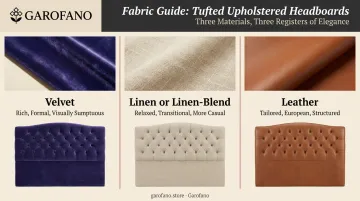
For designers building a traditional suite, velvet in a deep neutral — warm taupe, aged ivory, dusty sage — tends to anchor the room without competing with other traditional elements. Garofano's upholstered headboards are available across this range of materials, with tonal finish options that let the fabric carry the decorative weight while keeping the form refined.
5. The Panel Bed
The panel bed offers a cleaner, more architectural interpretation of traditional style. A framed headboard and footboard with inset paneling creates visual structure without ornate carving — and the form has genuine historical roots.
The V&A's English bed from 1500–1620 features a five-panel bedhead framed by architectural columns. The Great Bed of Ware uses large carved and marquetry headboard panels. The visual logic predates the retail category by centuries.
Why it works across room sizes: the panel bed doesn't demand ceiling height or dramatic scale. In a classic wood finish, it anchors a formal traditional room. In a lacquered or painted finish, it shifts toward transitional — equally at home in a room where traditional furniture meets a more contemporary surrounding.
6. Dark-Toned Wood Dresser or Armoire
Traditional bedrooms have always relied on substantial case furniture as part of the room's composition. A dark walnut or mahogany dresser grounds the room with visual weight. A tall armoire goes further — it reads as an architectural element, particularly in rooms where built-in storage doesn't exist.
Britannica traces the armoire's name to the Latin armarium, with the form becoming prominent in 16th-century France. The Met's French oak armoire from around 1710–1720 demonstrates strong architectural organization — doors, molding, proportion — that holds up four centuries later.
Construction details that separate quality from decoration:
- Dovetail drawer construction (though note: drawer fit and overall execution matter as much as joint type)
- Carved molding on drawer fronts or door frames
- Bracket or bun feet
- Antique brass hardware — historically documented on English casegoods as early as 1700
7. Matching Nightstands with Symmetrical Styling
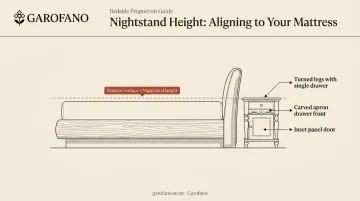
Nowhere is symmetry more visible in a traditional bedroom than at the bedside. Matching nightstands flanking the bed — paired with matching table lamps — create the orderly visual logic that defines the style.
Common traditional nightstand forms:
- Turned legs with a single or double drawer
- Carved aprons on the drawer front
- Inset paneling on the door or sides
On sizing: Architectural Digest advises that nightstand height should align as closely as possible with the top of the sleep surface. A nightstand that sits noticeably lower or higher than the mattress breaks the proportional logic the rest of the suite is working to establish.
8. Upholstered Bench at the Foot of the Bed
The upholstered bench at the foot of the bed is both a practical piece and a compositional one. It completes the furniture suite visually, provides a surface for laying out clothes or stacking throw blankets, and — when well chosen — echoes the materials or finish of the bed frame.
Architectural Digest recommends sizing the bench 6–8 inches narrower than the bed, with its height sitting a few inches below the footboard. On material pairing: an upholstered headboard pairs naturally with a tufted velvet bench; a carved wood four-poster or sleigh bed calls for a wooden bench with an upholstered seat rather than a fully fabric piece.
The slight contrast between bench and bed — a wood frame against an upholstered headboard, for example — prevents the composition from feeling over-coordinated.
9. An Ornate or Carved Wood Mirror
The bedroom mirror serves two functions simultaneously: practical and decorative. In a traditional interior, a wall-mounted or freestanding mirror with a carved or gilded frame echoes the detailing of the dresser or bed frame, pulling the room's material vocabulary together.
Museum collections document the historically grounded options clearly. The Met holds a Southern German mirror from around 1750 in gilded wood and ebony. The V&A records an English giltwood wall mirror from 1750–1770. American examples from the same period used walnut with carved and gilded ornament — the same combination still works.
Two placement approaches:
- Above the dresser — creates a traditional vanity arrangement, formally correct and highly functional
- Freestanding floor mirror in a corner — works in larger rooms where the dresser placement doesn't permit a wall-mounted piece
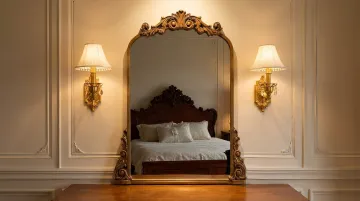
Gold-toned frames and dark wood frames are the most historically grounded choices.
10. The Storage Bed
The storage bed earns its place on this list not through historical lineage but through functional intelligence. Well-designed versions integrate under-bed drawers into the base without any visible compromise — the silhouette reads as a clean, grounded platform bed while eliminating the need for a separate chest at the foot of the room.
House Beautiful's 2023 editorial coverage documents storage beds using drawers, cubbies, and lift-up platforms while maintaining finished upholstered or wood silhouettes. For smaller traditional bedrooms, this is the most efficient solution: it preserves the visual clarity of the room while honoring the traditional value of purpose-built, considered furniture.
How to Style Traditional Bedroom Furniture: Key Design Principles
Choosing the right pieces matters. Arranging them into a room that feels intentional is the harder part.
Suite Cohesion and Symmetry
Furniture pieces in a traditional bedroom should feel like they belong to the same visual family — consistent wood tones, matching hardware finishes, complementary proportions. This doesn't require buying a matched set; it requires visual discipline. Pieces chosen from a cohesive collection, like Garofano's Italian-inspired bedroom range, make that discipline easier to maintain without sacrificing individual character.
The Role of Textiles
Solid wood furniture carries visual weight. Textiles balance it:
- Heavy drapery frames the room and adds depth
- Layered bedding adds softness at the room's focal point
- An area rug — Persian, Turkish, or woven wool — grounds the furniture arrangement and warms the floor plane
Architectural Digest documents Oriental rugs as a consistent presence in traditional English-inspired interiors. The pattern and warmth they contribute is difficult to replicate with any other element.
The Modern-Traditional Balance
Restraint is what separates a traditional bedroom that feels current from one that reads as a period room. A practical framework:
- Two or three strong statement pieces (bed, dresser, mirror)
- Restrained, high-quality textiles
- Minimal decorative objects on surfaces
- Modern art as a visual counterweight to historical furniture forms
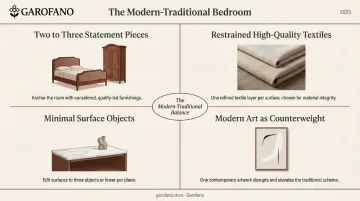
Antiques or inherited casegoods mixed with contemporary artwork — the combination prevents traditional from tipping into period-room territory and keeps the room feeling lived-in and personal.
Conclusion
Traditional bedroom furniture earns its longevity through proportion, quality, and design logic that doesn't depend on trends. Each piece on this list has anchored beautiful bedrooms across decades and design eras — not because they're timeless in some vague, generic sense, but because they're grounded in forms refined over centuries of serious furniture-making.
The right bed frame, dresser, and supporting pieces — chosen for material and craftsmanship — will define a room's character for years. What shifts around them are trends. What stays is the furniture.
For those building a traditional bedroom suite with a distinctly European sensibility, explore Garofano's bedroom collection at garofano.store. Each piece is made to order with customization options, delivered white-glove — built for residential spaces where proportion and material quality are non-negotiable.
Frequently Asked Questions
What defines traditional bedroom furniture style?
Traditional bedroom furniture is characterized by warm wood tones, carved or upholstered detailing, and symmetrical layouts rooted in European design history — specifically English, French, and Italian styles from the 18th and 19th centuries. Order and visual permanence are its defining organizing principles.
What wood is best for traditional bedroom furniture?
Mahogany, walnut, cherry, and oak are the most historically appropriate choices, each with centuries of furniture-making history behind them. Darker finishes read as more formal and traditional; lighter woods support a softer, transitional interpretation of the style.
How do you mix traditional bedroom furniture with a modern space?
Anchor the room with one or two strong traditional pieces, such as a four-poster bed or an armoire, and keep the surrounding palette neutral and restrained. Let the furniture carry the room — busy textiles and excessive decorative objects compete with it rather than complement it.
What is the difference between traditional and classic bedroom furniture?
"Classic" is used broadly to mean enduringly stylish. "Traditional" refers more specifically to a design vocabulary drawn from 18th- and 19th-century European furnishing styles : carved details, symmetrical layouts, rich materials, and recognizable historical silhouettes. In short, traditional is always classic, but classic isn't always traditional.
What are the essential furniture pieces for a traditional bedroom?
The core suite: a statement bed frame (four-poster, sleigh, or canopy), matching nightstands, a dresser or armoire, and an upholstered bench at the foot of the bed. A framed mirror and an area rug complete the composition.
How do I choose the right bed size for a traditional bedroom?
Four-poster and canopy beds suit larger rooms with higher ceilings; panel and sleigh beds work across room sizes. Leave at least 30 inches of clearance on each side of the bed. Tighter clearances make even well-chosen furniture look cramped, regardless of how strong the individual pieces are.