
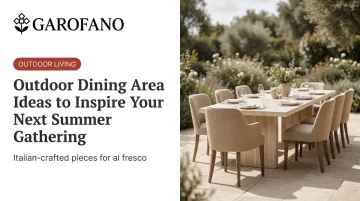
The problem most homeowners face is treating the outdoor setup as seasonal afterthought rather than considered space. A plastic table here, mismatched chairs there, a single flood light overhead. The result feels assembled, not designed.
This guide covers what actually separates a thought-through outdoor dining area from one that just exists: design principles, style directions, furniture selection, shade and lighting, and the finishing details that make everything cohere.
Key Takeaways
- Treat the outdoor dining area as an exterior room: proportion, materials, and atmosphere all count
- The dining table and chairs are the design anchor; every other decision flows from them
- Shade, flooring, and lighting function as structural decisions — get these right before choosing decor
- Limiting your material palette to two or three finishes keeps the space looking considered, not cluttered
- Even a compact balcony can achieve an elevated outdoor dining look with restraint
What Makes a Great Outdoor Dining Area: Design Principles First
Think in Rooms, Not Furniture
The single biggest mistake in outdoor dining design is placing furniture in open space without establishing any enclosure. A great outdoor dining area functions like an exterior room — it has a defined boundary, a surface underfoot that anchors the zone, and a sense of containment that makes guests feel settled rather than exposed.
Architectural Digest documents this consistently: pergolas, overhangs, rugs, and changes in elevation are the devices that give outdoor spaces room-like definition. Without at least one of these, a dining setup reads as furniture on a lawn rather than a designed space.
Scale and Proportion Matter More Than Style
Before selecting any furniture, assess your available footprint honestly. According to Outer's outdoor dining size guide, allow roughly 24 inches of table width per diner and a minimum of 36 inches of clearance around the table for chairs to move freely. For easier circulation, 42 to 48 inches is preferable.
Minimum patio footprints by seat count:
| Seats | Minimum Area |
|---|---|
| 4 | 8 × 8 feet |
| 6 | 10 × 10 feet |
| 8 | 12 × 12 feet |
A table that overwhelms the space creates visual tension. One that gets lost in it lacks presence. Get the scale right before anything else.
Layer the Space in the Right Order
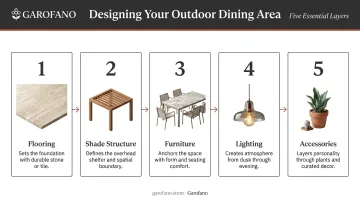
Design the outdoor dining area in this sequence — and resist jumping ahead:
- Flooring — flagstone, composite decking, concrete pavers, or porcelain tile creates the visual "rug" that defines the zone
- Shade structure — pergola, canopy, or umbrella establishes the ceiling and frames the space
- Furniture — table and chairs set the scale and material palette
- Lighting — layered for evening atmosphere, not just function
- Accessories — greenery, tabletop styling, rugs added last, with restraint
Keep the Material Palette Tight
Once the layers are in place, cohesion comes down to restraint in materials. Limit yourself to two or three finishes — teak, stone, and matte black metal is a complete palette on its own.
A few combinations that hold together well outdoors:
- Teak + stone + matte black
- Brushed concrete + white oak + raw linen
- Travertine + powder-coated aluminum + natural rope
Introducing a fourth wood tone or a third metal finish fragments the composition. Every element you add after that compounds the problem rather than solving it.
Outdoor Dining Area Ideas by Style
Identify your aesthetic direction before purchasing anything. Mixing influences — a farmhouse table under a minimal pergola with Mediterranean pots scattered around — produces confusion, not character.
Sleek and Modern
Clean geometry defines this look. The defining elements:
- Rectangular concrete or stone-top table
- Angular chairs in powder-coated black or matte white
- Structural greenery — ornamental grasses or succulents in simple concrete planters
- Integrated LED lighting under pergola beams or along bench bases
Keep accessories minimal. Pendant lighting in particular tends to compete with the architecture rather than complement it.
Mediterranean and Alfresco
This style draws directly from the Italian and southern European tradition of al fresco dining — a way of life, not a seasonal decision. Warm stone or terracotta underfoot, natural wood furniture with linen upholstery, a pergola draped in climbing vines, terracotta pots with lavender or olive trees.
Nothing should feel new or sharp-edged. The goal is a space that looks like it has been used and loved for decades.
Rustic Farmhouse
A long, solid wood table — distressed or natural finish — anchors this setup. The details that complete it:
- Mismatched chairs or a bench-and-chair combination for a gathered, unpretentious feel
- Potted herbs as the centerpiece rather than cut flowers
- Vintage lanterns for evening light
- A lawn or garden surround giving generous furniture room to breathe
This setup works best in larger backyards where the proportions can match the table's scale.
Covered Retreat
A pergola, canopy, or solid-roof structure transforms an outdoor dining area into something that functions year-round. The shelter creates enclosure, frames the space visually, and gives you a structure from which to hang lighting properly. One important note: the furniture inside should match the architectural quality of the cover. A substantial pergola paired with lightweight, budget chairs creates a mismatch in visual weight that pulls the whole composition apart.
Poolside and Resort-Inspired
The risk with poolside dining is excess — too many pieces, too much color, a result that reads more like a resort catalogue than a considered space. A shaded pergola or sail shade, weather-resistant upholstered seating, and an expansive dining table placed with clear intention relative to the pool edge. Fewer, better pieces with coherent spatial logic will always outperform a crowded one.
How to Choose the Right Outdoor Dining Furniture
Furniture selection is the most consequential decision you'll make. The table and chairs set the scale, define the material palette, and establish the visual character of the space. Everything else is built around them.
Materials Worth Knowing
| Material | Why It Works | Aging Profile |
|---|---|---|
| Teak | Naturally weather-resistant due to inherent oils; structurally stable | Develops silver-grey patina in 9–12 months untreated |
| Powder-coated aluminum | Lightweight, rustproof, UV-stable finish | Retains specified finish with minimal maintenance |
| Stone/concrete tabletops | Substantial, weather-tolerant, visually grounded | Minimal change; sealing recommended |
| All-weather wicker | Relaxed aesthetic, UV-resistant resin construction | Consistent appearance over time |
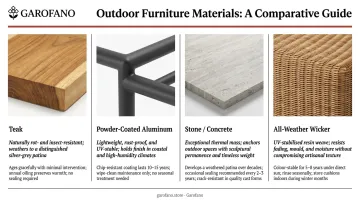
Table Shape by Space
- Rectangular — suits longer, linear spaces and larger groups; most versatile for formal dining
- Round — encourages conversation, works better in compact or square footprints; POLYWOOD notes that round tables suit smaller spaces and support conversation naturally
- Extending — the practical choice for hosts who entertain at different scales throughout the season
Seating Considerations
Don't underestimate the seating decision. A bench on one side of a rectangular table reduces visual weight and accommodates flexible numbers — it also adds a relaxed, gathered quality that individual chairs don't produce.
For long summer meals, cushioned seating matters. Look for upholstery in solution-dyed acrylic such as Sunbrella, which carries a 5-year limited warranty against qualifying fade and strength loss — the fiber chemistry, not just the label, is what determines outdoor performance.
The Anchor Principle
The anchor principle is straightforward: when the table and chairs are genuinely well-designed, every other styling decision becomes simpler. Pieces with clean silhouettes, considered proportions, and elevated materials function as the visual foundation — everything layered around them reads as intentional rather than assembled. Garofano's outdoor dining collection applies this principle directly: refined European proportions, weather-appropriate materials, and a restrained design language that anchors the space without dominating it.
Lighting and Shade: The Two Details That Make or Break the Space
Shade Is a Structural Decision
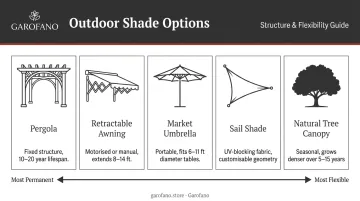
Shade determines whether the space is actually usable on summer afternoons — and how visually defined the dining zone feels. Options range from fully architectural to completely temporary:
- Pergola — most architectural, room-like enclosure; Trex's standard range runs from 12 × 10 to 18 × 18 feet with substantial warranty coverage
- Retractable awning — practical and flexible; SunSetter lists widths from 8 to 18 feet with projection up to 13 feet 1 inch
- Market umbrella — affordable and movable; residential canopies range from 7.5 to 11 feet in round formats
- Sail shade — minimal footprint, modern look; tensioned between supports rather than from a central pole
- Natural tree canopy — the only option that costs nothing, and one of the hardest to replicate with structure alone
Layered Lighting for Evening Atmosphere
A single floodlight flattens everything. Start with a pendant or string lights directly over the table as the anchor source, then layer in candles in hurricane jars, lanterns, or low-voltage perimeter uplighting. That combination creates the depth that makes an outdoor table feel intentional after dark.
Practical notes:
- Warm-toned sources (2700K) are more flattering than cool white at a dining table
- Solar and low-voltage outdoor lighting build real atmosphere without electrical installation — useful for patios and terraces where running power is not feasible
- Keep lighting targeted to the dining zone — contained light reads as more intimate and avoids washing out the surrounding landscape
Finishing Touches That Pull the Space Together
The Outdoor Rug
An outdoor rug defines the dining zone, softens the surface underfoot, and anchors the furniture grouping visually. Use 100% polypropylene or a flat-weave outdoor-rated construction that resists mold and fading. Size it correctly: the rug should extend roughly 32 to 36 inches beyond the table edge on all sides so chair legs remain on the rug when pulled out. A rug that chairs slide off immediately undermines the whole purpose.
Greenery as Structure
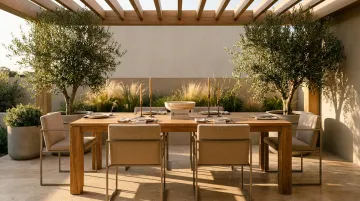
Potted plants earn their place in a dining space when they serve a spatial function — screening a sightline, adding height to frame the zone, or creating a visual boundary. Two or three considered placements (a tall olive tree in a simple planter, ornamental grasses flanking an entry point) work far better than a scatter of random pots. Mature foliage, flowering vines, and bamboo work particularly well as enclosure devices — they add height and definition without requiring hard construction.
Tabletop Restraint
Restraint does more work than abundance on a well-set table. A linen table runner, one low centerpiece (herbs in a terracotta pot, pillar candles, a shallow bowl of seasonal citrus), and quality tableware in a neutral palette say more about care and taste than an over-worked tablescape. The goal is a table that looks like someone thought about it — not one that announces effort.
Frequently Asked Questions
Frequently Asked Questions
What do you call an outdoor dining area?
"Alfresco dining area," "outdoor dining room," and "patio dining space" are all used interchangeably. Alfresco traces to Italian and specifically means eating in the open air — Merriam-Webster places its first English use in 1753. Any of the three terms is correct.
What furniture is best for an outdoor dining area?
Teak, powder-coated aluminum, and all-weather wicker are the most durable and design-appropriate choices. Teak offers natural warmth and weathers beautifully; aluminum is lightweight and rust-proof; wicker suits relaxed aesthetics. The best material depends on your style direction and maintenance preferences.
How do I create shade for my outdoor dining area?
Common options include pergolas, retractable awnings, market umbrellas, sail shades, and natural tree cover. Pergolas deliver the most architectural permanence; umbrellas offer the most flexibility and the lowest upfront cost. Your climate and budget will determine which is practical.
What size outdoor dining table do I need?
Allow roughly 24 inches of table width per person and at least 36 inches of clearance around the table for chairs to move freely. Match the table footprint to the full dining zone, not just the tabletop — chairs in use extend significantly beyond the table edge.
How do I make my outdoor dining area look more elegant?
Start with furniture that has clean proportions, keep your material palette to two or three finishes, and invest in lighting that works after dark. Restraint carries more weight than decoration — the fewer accessories competing for attention, the more refined the result.
Do I need a rug in my outdoor dining area?
Not essential, but valuable. A rug adds visual definition to the dining zone, softens the surface underfoot, and anchors the furniture grouping. Use an outdoor-rated flat-weave in a size that extends beyond the chair legs when pulled out — undersized rugs undercut the effect entirely.