Introduction
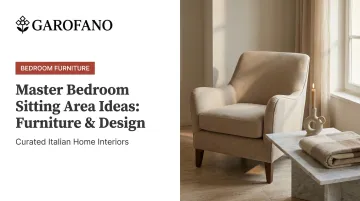
Most master bedrooms already have the space for a sitting area. The problem is the lack of intention — a chair left in a corner doesn't become a sitting area just because it's there. What separates a genuinely elevated bedroom retreat from a furniture arrangement is purpose. A defined zone needs the right seating, a surface, a light source, and enough visual coherence that it reads as a designed space — not an afterthought.
This guide covers everything you need to make that happen. You'll learn how to assess your space before buying anything, which furniture types suit which room sizes, and how to lay out a sitting area that doesn't compete with the bed. The finishing details that pull it all together are covered too.
Key Takeaways
- A sitting area needs only three things to function: comfortable seating, a surface, and a light source — everything else is refinement.
- Decide the primary use first — reading, morning coffee, or lounging — before selecting any furniture.
- Proportion matters more than size — correctly scaled furniture always looks more intentional.
- A rug and a dedicated lamp are the fastest ways to make a sitting area feel like its own space.
Before You Furnish: Assessing Your Bedroom for a Sitting Area
Start with circulation, not aesthetics. A 2025 bedroom planning guide from Homes & Gardens recommends 24–30 inches around a twin or full bed and 30–36 inches around a queen, with major traffic paths ideally reaching 36 inches. Once you've protected those clearances on your floor plan, the remaining footprint tells you what a sitting area can realistically be.
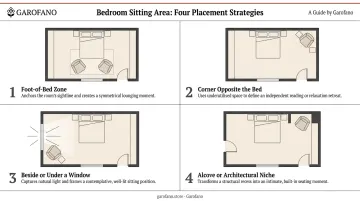
The four most common sitting area locations:
- Foot-of-bed zone — works when the bed-end circulation path stays open; House Beautiful has documented two lounge chairs placed here effectively
- Corner opposite the bed — compact and self-contained; suits a single chair under 30 inches wide
- Beside or under a window — exploits natural light; ideal for reading setups
- Alcove or architectural niche — the architecture defines the boundary, doing the boundary work for you
Defining the Purpose Before the Furniture
The intended use shapes every furniture decision that follows. Three common archetypes:
- Reading nook: one well-lit armchair, a side table, a floor lamp
- Morning coffee setup: two seats and a shared surface
- Lounging zone: a chaise or compact loveseat, an ottoman optional
Decide which category fits your lifestyle before you commit to a single piece of furniture.
Understanding Proportion and Scale
Visual weight determines whether a sitting area feels balanced against the dominant piece in the room: the bed. A large, tall headboard demands seating with a stronger visual presence. A low platform bed reads better alongside lower-profile lounge chairs.
The way pieces carry visual weight matters here:
- Open-legged, lighter-toned frames read as light and airy
- Dark, floor-hugging upholstery reads as heavy and grounding
- Mid-tone, moderate-scaled seating bridges both extremes
The objective is to counterbalance the bed's presence without competing with it.
The Best Furniture for a Master Bedroom Sitting Area
The Accent Chair
The single accent chair is the most versatile entry point into a bedroom sitting area. It works across a wide range of room sizes, requires the least floor space, and can anchor a reading nook or serve as a secondary lounging spot.
Chair types best suited to bedrooms:
- Bouclé upholstered armchairs: textural warmth without visual heaviness
- Wingback chairs: structured form, well-suited to defined reading corners
- Low-profile lounge chairs: relaxed silhouette that pairs naturally with platform beds
Garofano's lounge chair collection — including pieces like the Poltrona Bellagio, Arcadia, and Tholos — reflects the refined proportions and elevated finishes that suit a master bedroom's higher aesthetic standard. Each is available with customizable upholstery, so the chair can be specified to match the room's existing material palette rather than defaulting to a showroom finish.
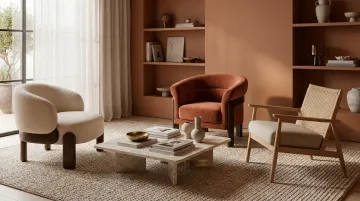
The Chaise Lounge
The chaise lounge occupies a moderate footprint while registering as the most considered seating choice in the room. It signals intentionality — a bedroom designed for rest, not just sleep.
Best placement options:
- Tucked beside a window to capture natural light
- Positioned by a fireplace on an angled axis
- Set off a corner diagonally to create movement in the room
Pair it with a small side table — a chaise without a surface is only half-functional. Garofano's Soma chaise lounge brings architectural clarity through a cantilevered seat and S-curve backrest, with customizable finishes that allow it to integrate naturally with the bedroom's existing material choices.
The Loveseat or Small Sofa
For larger master bedrooms where the floor plan genuinely supports it, a compact loveseat creates a true sitting room within the bedroom. The key is footprint discipline: measure the actual furniture envelope — including depth, recline range, and delivery clearance — against your plan before committing.
Architectural Digest's sofa-selection guide recommends choosing sofa depth based on intended use: deeper, less structured cushions support curling up; firmer, shallower seats resist wear and hold their silhouette longer. In a bedroom context, a shallower overall profile generally reads better than a deep sectional-style piece.
Garofano's Argos Sofa at 28 inches tall and 98 inches wide offers a low, rectilinear silhouette suited to rooms where the sofa needs to coexist with the bed without overwhelming the eye. Custom sizing is available for buyers who need a more compact configuration — contact the Garofano team directly.
The End-of-Bed Bench
The bench is the pragmatic choice for smaller master bedrooms where a full seating arrangement isn't realistic. It earns its floor space through function:
- Provides a seat while dressing without occupying a dedicated corner
- Surfaces folded linens, layered throws, or morning essentials
- Hidden-storage versions add value in rooms where every square foot counts
Ottomans, Poufs, and Footstools
These pieces layer into any configuration without demanding dedicated floor space. Their value comes from adaptability:
- As a coffee table: add a tray on top for a stable surface
- As a footrest: placed beside a lounge chair, it meaningfully extends comfort
- As overflow seating: handles an extra person without a permanent footprint
No single piece earns its keep more quietly than a well-chosen ottoman.
Master Bedroom Sitting Area Layouts for Every Room Size
Think of these size categories as planning frameworks — the exact square footage matters less than understanding which configurations your room can actually support.
Small Bedrooms (Under 200 sq ft)
The single-chair-and-side-table setup or an end-of-bed bench are the realistic options here. A sitting area in a tight master bedroom should occupy one corner without encroaching on the bed's clearance paths.
Small bedroom sitting area principles:
- Choose chairs with visible legs (no skirts) — they read lighter
- Use upholstery in lighter tones to avoid compression
- Keep the side table small and leggy, not a heavy cube
Mid-Size Bedrooms (200–350 sq ft)
A two-chair-and-side-table configuration or a chaise lounge works well at this scale. The key decision is orientation: face the seating toward a focal point — a window, a TV wall, or a fireplace — rather than leaving it floating in the room.
Several approaches can define the zone without structural changes:
- An area rug separates the sitting area from the sleeping zone cleanly
- A backless bookshelf creates a soft boundary with added storage
- A folding screen divides the space without permanently closing it off
Large and Suite-Style Bedrooms (350+ sq ft)
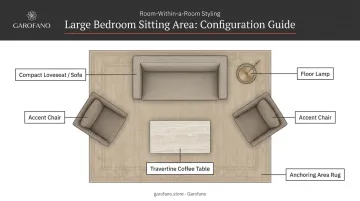
At this scale, the sitting area functions as a room-within-a-room. A full configuration works:
- Compact sofa or loveseat
- One or two accent chairs
- Coffee table or paired side tables
- Floor lamp as a dedicated light source
- Anchoring rug that ties the cluster together
The sitting area's own lighting scheme — separate from the bedroom's main fixture — is what makes the zone feel distinct rather than just a furniture grouping on the other side of a large room.
Visual flow tip: Orient the sitting area's furniture so it connects to the bed as the room's primary focal point rather than competing with it. The bed anchors; the sitting area supports.
Tying It Together: Making the Sitting Area Feel Cohesive
The Rug Strategy
Architectural Digest's rug sizing guide recognizes two valid approaches: all furniture legs on the rug (creates a more unified island) or at least the front legs on it (saves floor area). For a bedroom sitting area, the front-legs approach usually works best — it contains the zone visually while leaving breathing room.
When using two rugs — one under the bed, one anchoring the sitting area — they should share at least one color. A solid or tone-on-tone rug under the bed pairs well with a patterned rug in the sitting zone, or vice versa.
Repeating Materials and Finishes
The fastest way to avoid the "mismatched showroom" effect is to repeat two or three specific finishes across both zones:
- Match the sitting area's side table wood tone to the bedroom nightstands
- Pick one metal finish and hold to it — brushed brass or matte black, not both
- Repeat the same throw pillow fabric on both the bed and the accent chair
This is where a curated collection pays off. Garofano's pieces share clean silhouettes and natural finishes, so objects like the Candeliere Travertino Alto ($275) or the Vaso Ramificato Bianco ($365) work on a sitting area side table or a nightstand without forcing a match. The material language does the connecting work for you.
The Finishing Touches That Make the Difference
Lighting
Overhead lighting deadens a sitting area. A dedicated floor lamp or table lamp positioned near shoulder height beside the chair creates the warm, task-ready glow that makes the space feel lived-in rather than decorative.
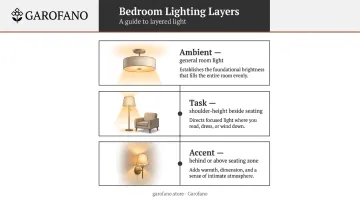
Three lighting layers to aim for — even two of the three transforms the atmosphere:
- Ambient — the room's general light source
- Task — the lamp directly beside or behind the chair, at the seated user's eye level
- Accent — a wall sconce or lit shelf behind the seating
House Beautiful's designer guidance places the lamp's base and shade at roughly the seated user's eye level to reduce glare. The exact position depends on chair height and shade depth, so test it before committing.
Textiles and Soft Accessories
Once the light is right, layering textiles is what separates a styled sitting area from a furniture display:
- A throw draped over the chair arm — loosely, not folded into a rectangle
- Two to three throw pillows sized appropriately to the seat
- A small vase or planter within the sitting zone — Garofano's Vaso Perla Marina ($319) or the Coppa Corallo Bianco ($275) offer the right scale for a side table or small surface
Keep textiles in the sitting area complementary to the bedroom's main bedding palette — not identical, which reads staged, and not contrasting, which reads disconnected.
Wall Treatment Above the Sitting Area
A blank wall above the seating is the most common reason well-furnished sitting areas still look unfinished. A single large-format art piece, a small gallery grouping, or a wall-mounted sconce above the chair creates a vertical anchor that makes the sitting area feel intentional from across the room.
Frequently Asked Questions
How much space do you need for a master bedroom sitting area?
There's no universal minimum — the practical test is whether your furniture, its use space, and all circulation clearances fit without crowding. A single chair setup works in rooms well under 200 sq ft; a full loveseat-and-chairs configuration needs significantly more room to breathe.
What is the best seating for a master bedroom?
The accent armchair is the most universally practical choice — it works in nearly any room size and requires the least floor space. The chaise lounge is the most luxurious option for rooms that can support the footprint. Choose based on the available space and your primary intended use.
How do you define a sitting area in a bedroom without using walls?
The most reliable non-structural approaches: an area rug anchoring the seating cluster, a backless bookshelf or open shelving unit acting as a soft divider, and furniture orientation with the seating facing away from the bed. Any one of these reads as a zone; all three together make it unambiguous.
Can a small master bedroom still have a sitting area?
Yes. A single armchair with a side table in a corner, or an end-of-bed bench, qualifies as a sitting area and requires minimal square footage. The key constraint is maintaining proper circulation clearances around the bed — those take priority over the sitting area's footprint.
How do you make a bedroom sitting area feel cohesive with the rest of the room?
Repeat one or two finishes across both zones — matching wood tones, a consistent metal finish, or a shared upholstery color family. For rugs, complementary rather than matching — similar tones, different scales — keeps both zones visually connected without making one look like a copy of the other.
What should go on the wall above a bedroom sitting area?
A single large-format art piece, a curated gallery grouping of two to four works, or a wall-mounted sconce are the most effective options. A blank wall above even well-chosen furniture makes the sitting area look incidental — like furniture that happened to land there, not a space that was planned.